
Biohazard cleanup · Dallas–Fort Worth
Blood and bodily fluids, unattended deaths, sewage, animal waste, sharps and infectious-disease disinfection. Our trained crews remove what's contaminated, disinfect what's left and dispose of the waste legally — for homes, rentals, vehicles and businesses across Dallas–Fort Worth.
Call 24/7: (469) 283-5227Request a free estimateWhat counts as a biohazard
A biohazard is any biological material that can transmit infection — blood, bodily fluids, tissue, human or animal waste, and the materials those have soaked into. OSHA regulates blood and "other potentially infectious materials" under its Bloodborne Pathogens Standard, and Texas treats saturated material as regulated medical waste. That's why a janitorial crew or a carpet cleaner can't take these jobs on, and why bleach and a mop leave the real contamination behind.
Blood and bodily fluids
Accidents, injuries, medical emergencies, assaults. Fluids migrate into carpet pad, subfloor, grout and drywall. Is blood a biohazard? Yes — here's why.
Unattended death and decomposition
The most complex scope we handle: deep material removal, structural cleaning and odor elimination that often reaches the HVAC.
Crime and trauma scenes
Once police release a scene, see our crime scene cleanup service for how we handle it discreetly.
Sewage backups
Category 3 "black water" carries bacteria and viruses. Affected drywall, insulation and flooring come out; the structure is disinfected and dried.
Animal waste, hoarding and pest contamination
Urine-saturated subfloor, droppings, rodent nesting and spoiled food. Often part of a hoarding cleanup.
Sharps and drug paraphernalia
Needles and contaminated debris collected in puncture-proof containers for proper disposal — common in vacant properties and rental turnovers.
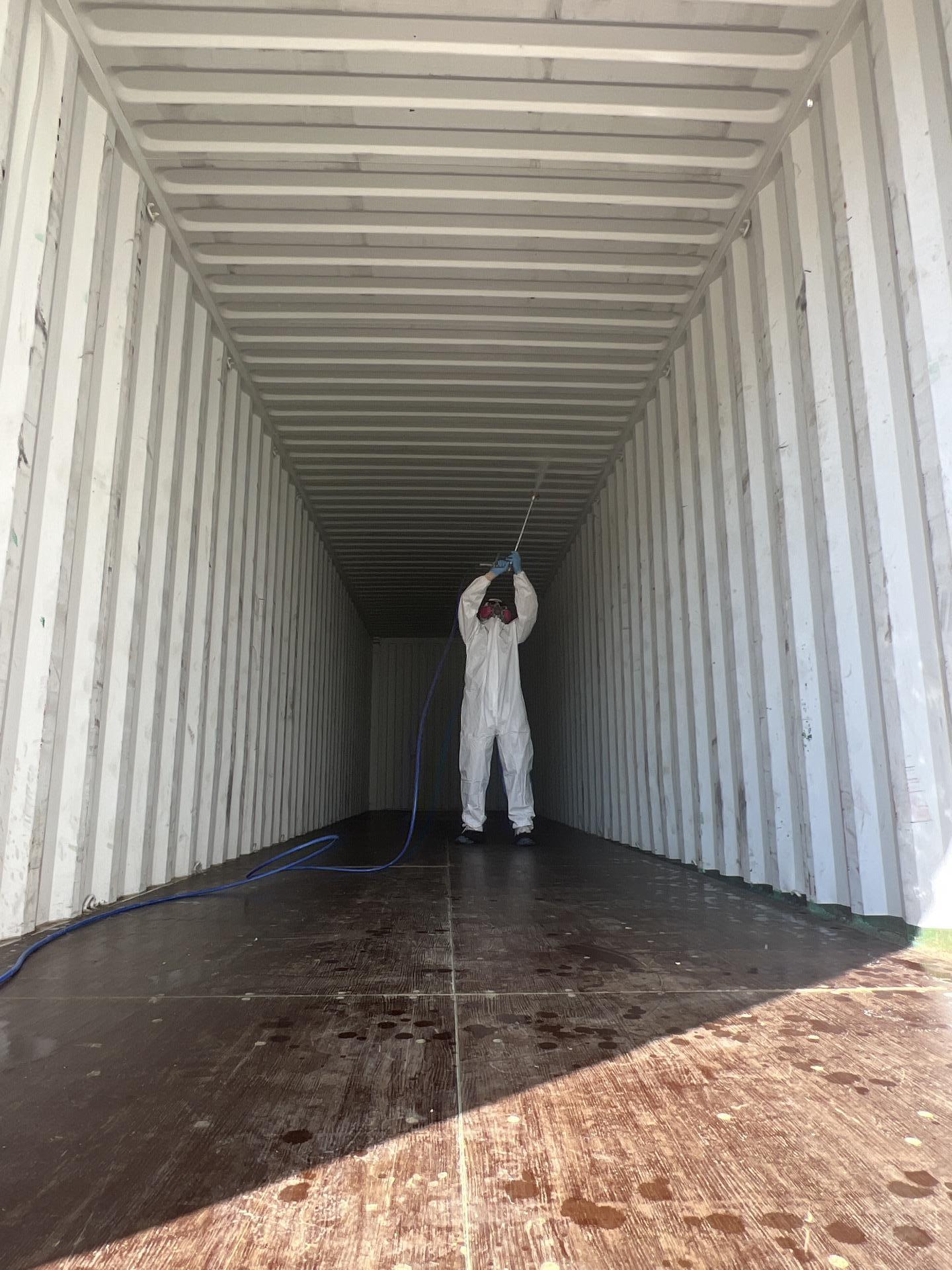
We answer 24/7 and dispatch same-day across Collin, Dallas, Denton and Tarrant counties.
Our process
The goal isn't a room that looks clean. It's a room where nothing infectious remains — and paperwork that proves the waste left legally. Here's the sequence on every job. For a deeper look, read what a biohazard team does.
01
Identify every affected surface — including what's under flooring and behind trim — and decide what can be cleaned and what must be removed.
02
Isolate the work area with barriers and negative air so contamination and odor don't travel through the building.
03
Cut out saturated porous materials and package them in labeled biohazard containers on site.
04
Clean remaining surfaces, then apply EPA-registered, hospital-grade disinfectants for their full contact time.
05
Eliminate odor at the source — removal first, then professional treatment — rather than masking it.
06
Waste leaves with a registered medical-waste transporter. You get photos, scope and paperwork. See how disposal works.
Cost
These are average prices across the biohazard cleanup industry, offered so you have a realistic frame of reference — not SES quotes. Price is driven by how far contamination has spread into porous materials, the square footage, the volume of waste, and whether odor has reached the HVAC.
Homeowners insurance often covers sudden biohazard events. We document everything and can bill your carrier directly. More detail in our biohazard and crime scene cleanup cost guide.
Small blood spill $500 – $1,500
Hard surfaces, no material removal.
Single-room trauma scene $1,500 – $4,000
Some carpet, pad or drywall removal.
Sewage backup, 1–2 rooms $2,000 – $6,000
Extraction, removal, disinfection and drying.
Unattended death $3,000 – $15,000+
Driven by time before discovery and HVAC involvement.
Industry averages, not quotes. To get a real quote for your situation, contact our team or call (469) 283-5227 — estimates are free.
Who we work with
After an accident, a death at home or a crime, we handle the cleanup so you don't have to see it. Insurance paperwork included.
Unit turnovers after an unattended death, sewage backups, animal waste and sharps in vacant units. Fast turnaround so units go back on the market.
Workplace injuries, restroom and sewage incidents, and blood spills in offices, schools, retail and warehouses — with OSHA-aligned documentation.
Blood and bodily fluids in cars, trucks and fleet vehicles. Upholstery and carpet removed or treated as needed.
Biohazard questions
Yes. Blood can carry bloodborne pathogens such as hepatitis B, hepatitis C and HIV, and OSHA regulates it as potentially infectious material. Material saturated with blood must be removed and disposed of as regulated medical waste.
Across the industry, most residential biohazard cleanups average about $1,500 to $6,000, with small spills less and unattended deaths often more. These are industry averages only — to get a real quote, contact our team for a free estimate.
Many homeowners and renters policies cover sudden biohazard events such as a death, injury or sewage backup. Coverage varies by policy. We document the scope and can bill your insurer directly.
A small spill can be finished in a few hours. A single-room trauma scene is usually one day. Unattended deaths and large sewage losses can take several days, mostly because of material removal and odor treatment.
Usually, yes, as long as the work area is contained and you stay out of it. For decomposition or large sewage jobs we may recommend staying elsewhere until odor treatment is complete.
Yes. We answer 24/7/365 and dispatch same-day across Collin, Dallas, Denton and Tarrant counties. More answers on our biohazard cleanup FAQ page.
Biohazard cleanup across DFW
Tell us what happened and where. We'll explain the process and cost up front, and have a trained crew on the way.